Two weeks after my anomaly report vanished from the queue, I badged the basement turnstile the way I always did and the reader sang the wrong note.
Amber. Soft double chime. Not the green I had been walking through for eight months. I actually tried the card a second time, because that is what you do when a door you own suddenly pretends not to know you. The armed guard behind the polycarbonate did not stand up. He looked almost embarrassed for me. He slid a laminated visitor credential across the pass-through, pointed at the central elevators, and said Section Four was expecting me on the fourth floor.
Expecting me. That was the word he used. Not detained. Not escorted. Expected. As if someone upstairs had read the thing I filed, decided I was too useful to leave in the pit, and too interesting to leave unsupervised.
Downstairs in the bullpen, the air had smelled of hot circuit boards, industrial ozone, and bad cafeteria coffee brewed three hours too early. The floor was concrete beneath anti-static rubber runners, and the ceiling was a dense grid of exposed cable trays and buzzing fluorescent tubes that made everybody look slightly jaundiced.
The fourth floor was another world.
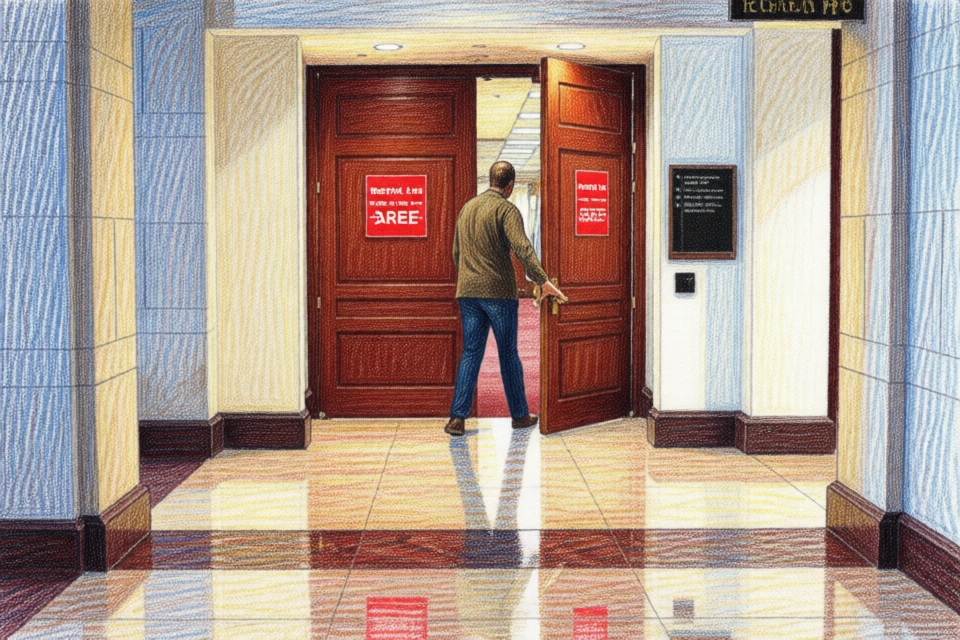
Up here, thick slate-gray carpet swallowed the sound of every footstep. The lighting came from indirect, warm recessed strips built into polished acoustic tile. The air was cool, filtered, and smelled faintly of expensive citrus cleaning solvent. And on the eastern wall, running the length of the executive corridor, were windows.
Real windows.
Downstairs, analysts went months without seeing daylight unless they smoked on the gravel loading dock. Here, double-paned ballistic glass framed the jagged, snow-dusted spine of the Wasatch Range rising out of the valley haze.
It looked like a corporate boardroom for an investment bank that owned half the hemisphere.
My new supervisor was a woman named Elena.
She wore gray wool slacks, spoke in a tranquil, measured voice that never rose above a library whisper, and showed me to an open workstation positioned directly in front of her glass-walled office.
"Your clearance profile has been re-indexed, Krystyna," she said, handing me a fresh smartcard embedded with a gold contact chip. "We do not run exploratory scripts here. We review finished products."
My new workload made no sense.
In the bullpen, I lived inside the firehose: half a million raw intercepted posts, diplomatic cables, automated bot clusters, and regional radio transcripts coming out of Tehran, Riyadh, and Tel Aviv every hour. My job had been triage, hunting the ignition point of narrative fires before they crossed the Atlantic.
Up here, the firehose was gone. In its place was a trickle of polished, immaculate text.
Syndicated news columns queued for morning release. Economic forecasts prepared for international banking cartels. Policy white papers authored by think tanks along K Street in Washington. Speeches scheduled to be read by undersecretaries at NATO working sessions in Brussels.
My assignment was simple: open each document, pass it through an automated internal routine called Normalization, and inspect the differential output.
The words rarely changed. The arguments remained untouched. But every time I ran the batch, the token metrics shifted. The pipeline quietly ironed the cadence, collapsed parenthetical thoughts, and introduced clean, rhythmic breaks.
Whenever I looked at the raw diff log, the same identifier populated the alteration manifest.
Token-ID 8413.
It was happening right in front of me.
The visitors started on the second day.
I had been taught, the way everyone is taught, that power had a face. You saw it on the evening feeds. The man who stood one step off the president's left shoulder while the statement was read. The woman who did the Sunday show from a chair that cost more than my car and spoke as if she had just come from the room where history was decided. The retired four-star who still got introduced as if the stars had not been taken off the collar. Deputies. Envoys. The people whose names the anchors said with that particular hush, the one that means: this person knows what the president is thinking.
I had believed that hush. You almost have to. It is how the country explains itself to itself. Decisions come from a desk in Washington. These are the mouths. These are the minds behind the mouths.
They came to the fourth floor in quiet little groups. No press pool. No motorcade theater. A dark SUV on the restricted ramp, a badge that opened every reader, a walk down the citrus-smelling carpet as if they had been here more often than I had. The first one I recognized I actually felt a stupid, leftover civic thrill, the way you feel when a face from a screen occupies the same air as your body. Then I watched him sit.
He did not give orders.
That was the thing that would not leave me. He sat in the glass conference room with a legal pad and a pen that never stopped moving, and the people who talked were ours. Elena's people. A man I did not have a name for, gray at the temples, no television manner at all. They spoke in the same library voices the floor used for everything. The famous man nodded. He underlined. Once he asked a question and the gray man did not look at him when he answered; he looked at the packet. When the famous man left, he had a folder under his arm that had not been in his hand when he arrived, and his mouth was already making the shape of a sentence I would hear twelve hours later on a clipped morning hit, word for word, pause for pause.
I told myself it was a briefing. Important people get briefed. That is what staff is for.
The woman from the Sunday chair came on Thursday. I knew the jewelry. I knew the exact tilt of the head she used when she was about to be disappointed in the panel. She stood in the corridor outside Elena's glass and listened while someone half her age walked her through a page. She did not interrupt. She did not correct. She said thank you in a voice I had only ever heard used on other people. Then she went downstairs and, that night, told the country what had been decided.
Decided where? That was the question that sat in my stomach like cold water. I had grown up on the Western Slope believing the map of authority ran one way. Elected. Appointed. Advised. The people on the screen were the ones who knew. Up here they looked like principals waiting outside an office. Not frightened. Not shackled. Something worse than that. Receptive. As if the decision had already been finished in a room with no cameras, and their job was to carry the finished language into the light and wear it like it had been theirs.
I did not have a theory yet. I had a feeling that made the Wasatch outside the ballistic glass look like a painted backdrop. The country thought it was watching the people in charge. I was watching the people in charge collect their lines.
On my third morning, I leaned against Elena's doorway while she signed off on an outbound transmission packet.
"Why are we running stylistic adjustments on civilian press wires?" I asked.
Elena didn't look up from her paperwork. She capped her pen with a deliberate, soft click.
"Consistency is security, Krystyna."
"It isn't an editorial edit," I said, keeping my voice gentle. "The cadence is mechanical. It's being introduced deliberately."
She folded her hands on her blotter and looked at me with eyes that were entirely polite and completely dead.
"You were brought to this floor because your diagnostic work was noted for its precision," she said. "Precision is valuable when it is directed. It is dangerous when it wanders. Run the normalization queues. Confirm the diffs. Do not worry about the weather outside the building."
That was when the cold truth finally settled into my stomach.
This wasn't a promotion.
It was a quarantine.
Downstairs, Halvorsen had seen my anomaly report, recognized the tripwire I had stumbled over, and kicked me upstairs into a velvet cage. Up here, my terminal was isolated: no external sandbox partitions, no script execution privileges, no access to historical databases. My desk was positioned five yards from Elena's glass wall, under the unblinking lens of a dome camera mounted directly overhead.
They hadn't fired me because firing an analyst with a Top Secret ticket over a token query would raise flags in internal affairs. Instead, they put me where they could watch my hands, drown me in harmless clerical busywork, and wait for my curiosity to starve.
They thought I would sit quietly, collect my federal grade increase, and look at the mountains.
They forgot about Miller.
Miller wasn't an executive. He was a lifer who still lived in the basement dust. Twenty years in the building. Six of them on this floor, staring at East European nets until his back gave out. When I showed him that query two weeks ago, he hadn't looked confused. He hadn't asked questions. He had turned white as a bedsheet and ordered me to purge the cache because he already knew what the system did to people who went looking for that column.
If anyone inside this concrete tomb understood what the mark meant, it was him.
At noon on Thursday, I took the service stairs back down to Level B.
The main facility cafeteria was a cavernous, windowless hall in the same underground stack as the bullpen. It smelled of industrial fryer oil, overcooked green beans, and floor wax. Long tables of analysts sat in departmental clusters, hunched over plastic trays, segregated by their security tickets: the cryptography teams huddled near the soda fountains, the network traffic modelers near the tray returns, and the language specialists near the far wall.
I spotted Miller sitting by himself at the end of a middle bench, a half-eaten turkey club on a paper plate beside a stack of printed system error sheets.
I grabbed an iced tea from the cooler, walked across the polished linoleum, and slid onto the metal bench directly opposite him.
Miller looked up. When he recognized my face, he choked on a mouthful of potato chips. He grabbed a paper napkin, coughed into his fist, and knocked his plastic fork onto the floor.
"Krystyna," he sputtered, his face instantly turning a violent shade of crimson. He scrambled under the table to retrieve the fork, bumped his shoulder against the underside of the laminate bench, and popped back up looking thoroughly disheveled. "Hey. Wow. You're... you're upstairs now. We heard."
"I am," I said, offering a small, easy smile.
"Must be nice," he muttered, adjusting his wire-rimmed glasses with a trembling finger. "Real carpet. Windows. They say the coffee up there doesn't taste like battery acid."
"The coffee is better," I agreed, leaning my forearms on the table. "The company is worse."
He blinked, utterly unprepared for that answer. His eyes flickered toward my sweater, then dropped to the front of it the way they always did, then darted down to his greasy paper plate. "Yeah? Well, you know how administration is. Lots of briefs. Lots of... management."
He picked at the crust of his sandwich. "Weather's been brutal out there this week. Cold front rolling off the salt flats. My heater in the Honda is giving out again. Probably the blower motor."
I hated small talk.
I despised it with an intensity that bordered on physical nausea. Listening to people recite meteorological trivia and mechanical complaints to fill the void in their lives always felt like chewing on dry aluminum foil. But right now, Miller was retreating into mundane trivia like an infantryman diving into a foxhole. He was terrified of what we both knew was sitting between us.
"Sounds like a bad bearing," I said smoothly, enduring every second of it.
"Yeah, maybe," he said, nodding too fast. "Either that or the resistor pack. I have to pull the glove box out this weekend to get a meter on it."
He took a long, awkward slurp of his Diet Coke, desperate for an excuse to look anywhere except at my eyes.
I waited for the silence to stretch just long enough to make him squirm.
"Miller."
He froze, the plastic straw still hovering near his mouth.
"I'm sick of the food in this place," I said quietly, leaning in just enough that he had to lower his head to hear me over the cafeteria din. "And I'm sick of talking to people whose faces don't move."
His throat bobbed as he swallowed dryly. "Yeah?"
"Let's get dinner tonight. Outside the gate. Real food, in town, where the ceiling doesn't have acoustic dampers."
Miller stared at me as if I had just spoken to him in classical Aramaic. For eight months he had watched me from the next chair and told himself I hadn't noticed. Now I was sitting across his lunch tray, looking directly into his pupils, asking him to leave the reservation with me.
"Dinner?" he croaked.
"Dinner," I said. "Seven o'clock. That steakhouse off the highway in Draper. The one after you clear the last checkpoint."
A frantic, desperate hope washed over his face, completely overriding whatever survival instincts had kept him alive in this basement for six years.
"Yeah," he stammered, a clumsy, genuine smile finally breaking across his pale face. "Yeah. I know the place. Seven o'clock. I'll... I'll be there."
"Good," I said, picking up my tea and sliding out from the bench. "Don't be late, Miller. We have a lot of catching up to do."
I walked toward the tray return without looking back, feeling his eyes burn into my spine every step of the way.
The trap was set.