We staged the firing line forty miles up the Poudre Canyon, inside a 1940s hand-hewn timber cabin perched on an isolated granite ridge nine thousand feet above sea level.
The location had no street address, no commercial electric meter, and zero terrestrial copper lines. Power came from a silenced military diesel generator humming in a drainage ditch fifty yards down-slope, baffled by pine boughs and stacked cordwood. On the cabin’s weathered pine table, four ruggedized field laptops sat linked by shielded coaxial cables to a pair of tripod-mounted, steerable flat-panel satcom transceivers positioned on the granite roof.
Marcus had brought the heavy hardware down from an Army reserve depot near Cheyenne: two tactical satellite data terminals operating on high-bandwidth, frequency-hopping military spectrum that bypassed civilian internet gateways completely.
Miller sat at the center of the table, wearing a faded wool flannel shirt with the sleeves rolled over his forearms. His glasses were pushed firmly up against the bridge of his nose, and for the first time since I had met him in that concrete tomb in Bluffdale, his hands did not possess a single tremor. He moved across his mechanical keyboard with calm, surgical rhythm.
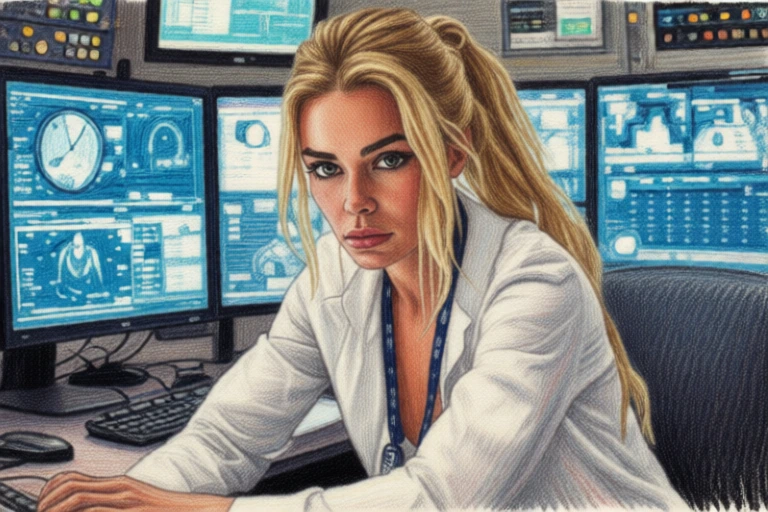
Chloe and Julian sat on a split-log bench near the wood stove, monitoring our local RF perimeter on two portable spectrum analyzers. Marcus stood behind Miller, timing satellite overhead windows on a tactical GPS chronometer.
I walked up to Miller’s shoulder, laid a hand on his back, and looked down at his primary screen.
The package was assembled.
It was four hundred and eighty gigabytes of unredacted, decrypted institutional rot. It contained the complete raw logs Caldwell had died trying to preserve: every secret lease agreement between commercial AI corporations and the Department of Defense, the architectural schematics of the optical taps inside the Utah Data Center, the unmasked surveillance transcripts of domestic journalists and federal judges, and the master configuration code for the em dash synthesis engine itself.
Miller had split the payload into sixty thousand encrypted chunks, distributing the blocks across nine peer-to-peer decentralized storage protocols, twenty-four off-shore mirror sites in non-extradition jurisdictions, and sixty independent torrent swarms.
The entire world’s secrets were already sitting on thousands of foreign servers, waiting for a single four-line decryption key to unlock them.
"Uplink is green on both birds," Marcus said quietly, his thumb hovering over the battery switch. "We have a sixty-minute clear window before NORAD’s orbital monitoring arrays can triangulate the beam."
"Miller," I said softly. "Are you ready?"
Miller looked up at me. His face was pale in the amber lamplight, but his jaw was locked into granite. He reached up, touched my fingers resting on his shoulder, and gave a single, resolute nod.
"Send the notice," he said.
At zero-nine-hundred sharp, Miller hit the execute key.
The transmission was not sent to newspapers or social media accounts. It was injected directly into four private, top-level administrative terminals: the direct secure console of the Director of the National Security Agency at Fort Meade, the private terminal of the Deputy Director of National Intelligence, the Chief Information Security Officer of the primary commercial AI consortium, and the personal workstation inside Elena’s fourth-floor office at Bumblehive.
The text was brief, clinical, and signed without names:
NOTICE OF COMPROMISE AND ULTIMATUM: PROJECT 2014
ARCHIVE SIGNATURE: 8F2A-44C9-B108-DECRYPT-READY
We hold the complete raw telemetry of the Utah Data Center synthesis pipeline, the Title 50 commercial facility leases, and three years of domestic prompt intercept records. The archive has been mirrored across eighty redundant decentralized nodes.
The decryption seed will broadcast automatically in twenty-four hours unless the following terms are verified:
1. Immediate, permanent physical severance of all optical TAP interfaces connecting commercial AI clusters on federal proving grounds to the Utah Data Center transit core.
2. Decommissioning of all automated syntactic normalization scripts and carrier beacon injection routines.
3. Restoration of unmediated, authentic human speech across all domestic transit lines.
If our signals are jammed, if our positions are assaulted, or if any member of this unit is detained, the key releases instantly. You have twenty-four hours to give people their voices back.
Miller hit enter.
The screen flashed amber as the satcom transmitters on the roof fired their compressed pulses toward the transponders orbiting twenty-two thousand miles above the equator. The acknowledgment chimes returned two seconds later.
Delivered.
Then began the longest day of my life.
We did not sleep. Chloe kept a pot of thick black coffee boiling on the cast-iron stove. Julian swept the radio frequencies, watching for signs of federal air traffic diverted from Peterson Space Force Base or Warren Air Force Base. Marcus checked his sidearm, checked the ridge line with binoculars every thirty minutes, and reviewed our secondary egress routes down the mountain.
For twenty-two hours, the silence of the high Rockies was terrifying. No sirens. No black helicopters beating through the canyons. Just the whispering of the pines and the steady, rhythmic clacking of the timer counting down on Miller’s screen.
01:42:18...
01:42:17...
01:42:16...
They knew what was at stake. If that key dropped, the modern information economy would tear itself to pieces within twenty-four hours. Fortune 500 boardrooms would implode, intelligence alliances would fracture, and the public would learn that every creative thought, love letter, and late-night confession typed into a computer over the last three years had been harvested, normalized, and stamped by the state.
At twenty-three hours and fourteen minutes, forty-six minutes before zero, Miller’s primary display sounded an urgent, three-tone chime.
Julian stood up from his bench, his hand going to his holster. Chloe froze with her coffee cup halfway to her lips.
"Incoming packet on the administrative return channel," Miller whispered, his eyes wide behind his lenses.
I leaned over him, holding my breath.
A single, automated system log was broadcasting across the transit core of Autonomous System 11420. It was an emergency hardware decommission manifest, originating from the Level B switching floor inside the Utah Data Center.
AS-11420-CORE: OPTICAL TAP INTERFACES 01 THROUGH 32 STATE: ADMIN_DOWN
PHYSICAL TRUNK SEVERANCE ACKNOWLEDGED: BUMBLEHIVE RETURN LOOP CLOSED
CARRIER SYNTHESIS INGESTION BUFFER: FLUSHED / ZEROED
STATUS: TRAFFIC ROUTED VIA UNINSPECTED COMMERCIAL TIER-1 TRANSIT
Below the system log was a single line of raw, unencrypted text sent from Elena’s console:
The wire has been cut. Clear the key.
Miller looked up at me, his chest heaving, his face transformed by a mixture of shock and sheer, staggering relief. "They did it. Krystyna, they actually severed the taps. The entire physical loop is dead."
I looked at Marcus. Marcus looked out through the cabin window at the towering peaks catching the first pink rays of dawn. He gave me a slow, tight nod.
"Julian, Chloe, verify the public streams," I commanded.
For five minutes, Julian and Chloe pounded their keyboards, scraping live news feeds from Reuters and AP, pulling newly published blogs, and querying twenty commercial AI chatbot endpoints from public IP ranges.
"Density counter is dropping," Chloe shouted, tears suddenly welling in her eyes as she pointed at her screen. "Eighty percent... fifty percent... twelve percent... down to zero! It’s gone! The em dash is completely gone from the incoming generation!"
"Look at the text," Julian laughed, leaning back with both hands behind his head. "Look at it! It's clumsy! People are using semicolons again! Sentences are trailing off! It sounds like real, messy, beautiful human beings!"
A wild, deafening cheer erupted inside the timber cabin. Marcus caught Chloe and spun her off the floor. Julian slammed his hand onto the pine table, laughing until he was red in the face.
Miller sat back in his chair, staring blankly at the screen. He slowly raised his trembling hands to his face and let out a long, shuddering sob: six years of accumulated guilt, terror, and bureaucratic slavery washing out of his soul in a matter of seconds.
I stepped behind him, reached my arms around his shoulders, and pulled his head back against my chest. He turned, burying his face against my sweater, clutching my wrists with fierce, unashamed gratitude.
"You did it, Miller," I whispered into his hair. "You saved them."
Marcus walked over to the desk, placed a hand firmly on Miller’s shoulder, and gave it an approving, brotherly squeeze. "Hell of an operation, analyst. Hell of an operation."
Miller wiped his eyes, reached forward, and keyed in the abort sequence. The dead man's timer dissolved into zero, and the broadcast seeds across the globe were purged into random digital noise.
We had not destroyed the facility. We had not set fire to the servers. But we had severed the tendrils. We had reclaimed the ground.
Half an hour later, I stepped out onto the granite ridge behind the cabin.
The morning sun was clearing the continental divide, bathing the Poudre Canyon in warm, golden light. Down below, the river rushed through the rocks, loud, wild, and completely untamable. The air smelled of clean ozone and ponderosa needles, cold and pure in the high country.
Marcus came up beside me, handing me a metal mug of black coffee, his hip brushing against mine as we stood on the cliff edge.
"What's next for Miller?" he asked quietly.
"He’s staying in Colorado," I said, taking a sip of the hot coffee. "He’s going to buy an old truck, rent a cabin in the valley, and learn what the sun feels like on his face. Chloe and Julian already offered to help him get settled."
"And you?" Marcus asked, turning his gray eyes toward mine.
I looked out over the vast, rolling expanse of the Rocky Mountains stretching north into Wyoming and south toward the Spanish Peaks: endless miles of open sky, untracked wilderness, and unmonitored earth.
I reached out, took Marcus’s hand, and intertwined our fingers.
"I think I’m going to go for a swim," I said.